
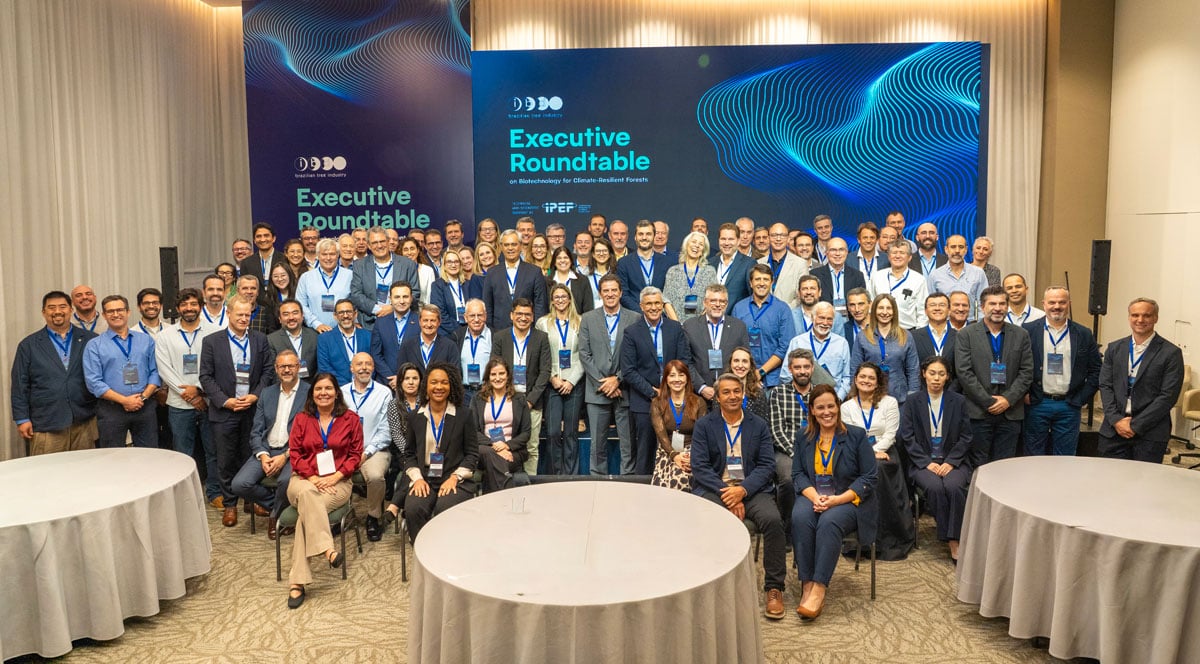
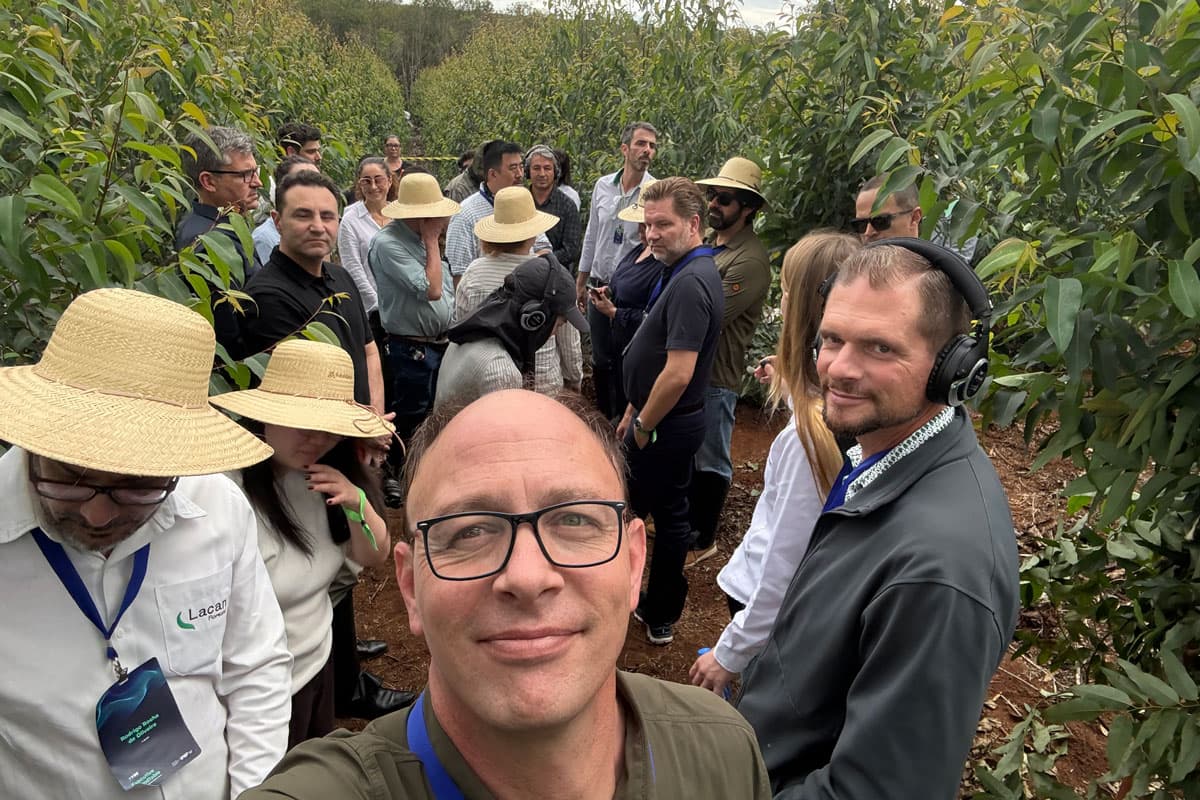
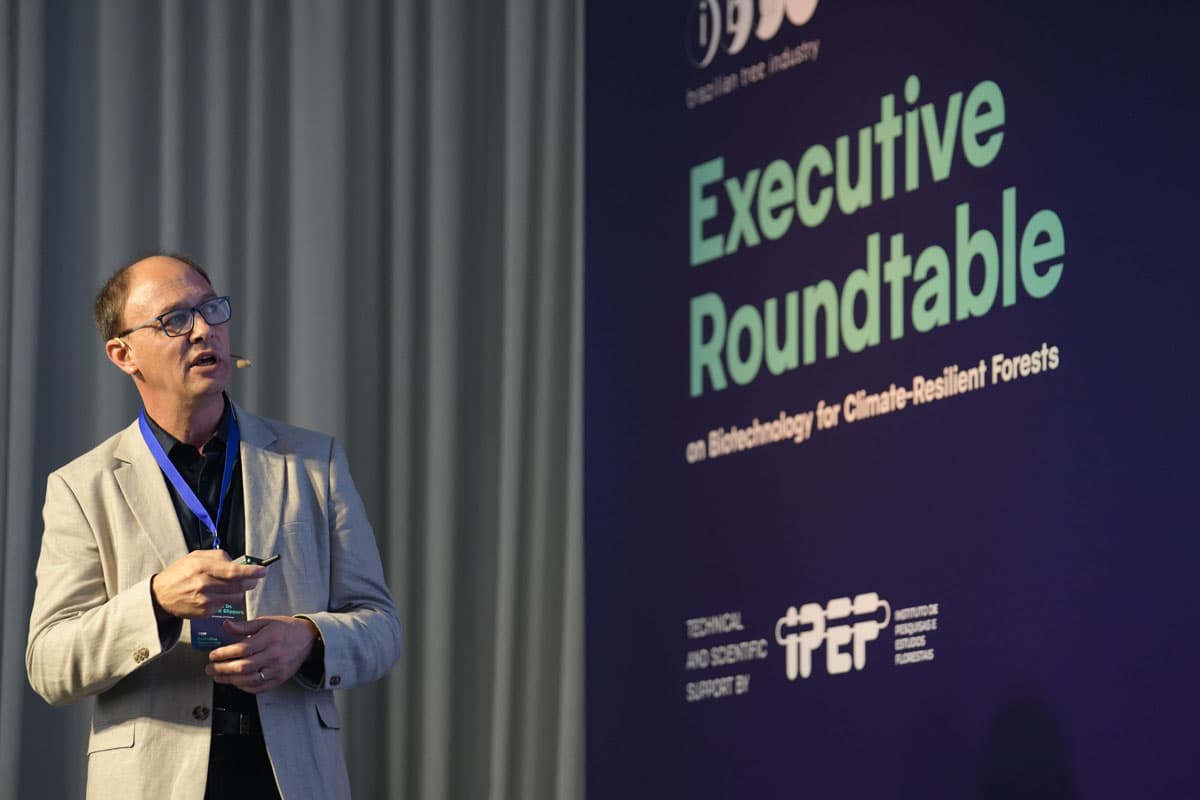
On 14 October 2026, FABI Director, Prof. Bernard Slippers was an invited speaker at the Executive Roundtable on Biotechnology for Climate-Resilient Forests in São Paulo, Brazil. The roundtable was promoted by Ibá, the Brazilian Tree Industry association, with technical and scientific support from IPEF, the Forestry Science and Research Institute. It brought together executives from across the plantation sector, representatives of industry associations, and national and international scientists, to work through what it will take to keep planted forests productive in a changing climate. Bernard spoke on the Climate Change Panel about pests and diseases, with three messages. First, new pests keep arriving: about one new species reaches South American plantations every two years, with no sign of slowing, similar to other parts of the world. Second, climate amplifies the impact. Increasingly hot droughts and other climate anomalies stress plants, trigger latent pathogens that already live inside healthy trees, and change pest distributions and life cycles. Third, it is a global problem. Everyone's watch list is somebody else's present, and what South Africa, Europe or Asia faces today is highly likely to reach South America, often within a few years. He then highlighted five things that are needed. Prevent, through clean seed and planting material, and screening for latent infections, not only visible symptoms. Detect, through shared surveillance across companies and countries, with connected data. Respond, with local capacity and international networks, and solutions ready in advance. Breed, by testing material for disease under drought, keeping portfolios diverse and using every tool, biotechnology included. And cooperation, through a structured global network for early warning and for sharing capacity and solutions in a strategic manner. The meeting also included exciting presentations on advances in tree biotechnology, and strong calls for why these are urgently needed as part of the toolbox to deal with the severe pressures facing forests globally. 'The time is now', for using the full toolbox that biotechnology offers together with traditional tools, was a call repeated frequently throughout the discussions. Having seen the increasing impact of climate change and pests and diseases in many parts of the world, Bernard strongly agrees. Each panel was followed by table discussions and an open debate, and the outcomes will feed into a technical-executive report on strengthening the climate resilience of tree plantations through a combination of approaches. As Bernard emphasised, forest health is a shared asset that no company or country can protect alone, and capacity and networks are the insurance. The event was concluded with a visit to the very impressive facilities and operations of the FutureGene facilities in Itapedininga, as well as field trials with genetically engineered Eucalyptus. FuturaGene has been leading tree biotechnology developments for over two decades. They have multiple transformed Eucalyptus varieties with enhanced traits for insect resistance and herbicide tolerance that could enhance the productivity and sustainability of forestry operations, and that have passed all regulatory steps for release in Brazil. Currently the deployment of such genetically engineered material is not allowed on the global market by certification schemes – a topic of active engagement at the roundtable, given what these products can contribute to the future sustainability of forestry. FutureGene is owned by the Suzano forestry company.