
Recent outbreaks of Gonipterus sp. n. 2 in South African Eucalyptus plantations have raised concerns about the effectiveness of existing biological control measures in keeping pest populations below damaging levels. Although the egg parasitoid Anaphes nitens is present and has historically been effective in controlling Gonipterus, recent observations suggest that parasitoid populations may not always be high enough to suppress the pest.
To address this challenge, researchers from the Forestry and Agricultural Biotechnology Institute (FABI) – Tree Protection Co-operative Programme (TPCP), in partnership with the forestry industry, have started a pioneering trial to determine whether augmentative releases of A. nitens can enhance biological control of Gonipterus.
On 1 and 2 October, the team set up the first field trial in the KwaZulu-Natal (KZN) Midlands at a site that was experiencing large numbers of the pest. Augmentative releases of A. nitens were done to supplement the existing parasitoid population. The project will measure the potential of these augmentative releases to increase parasitism and help reduce Gonipterus populations.
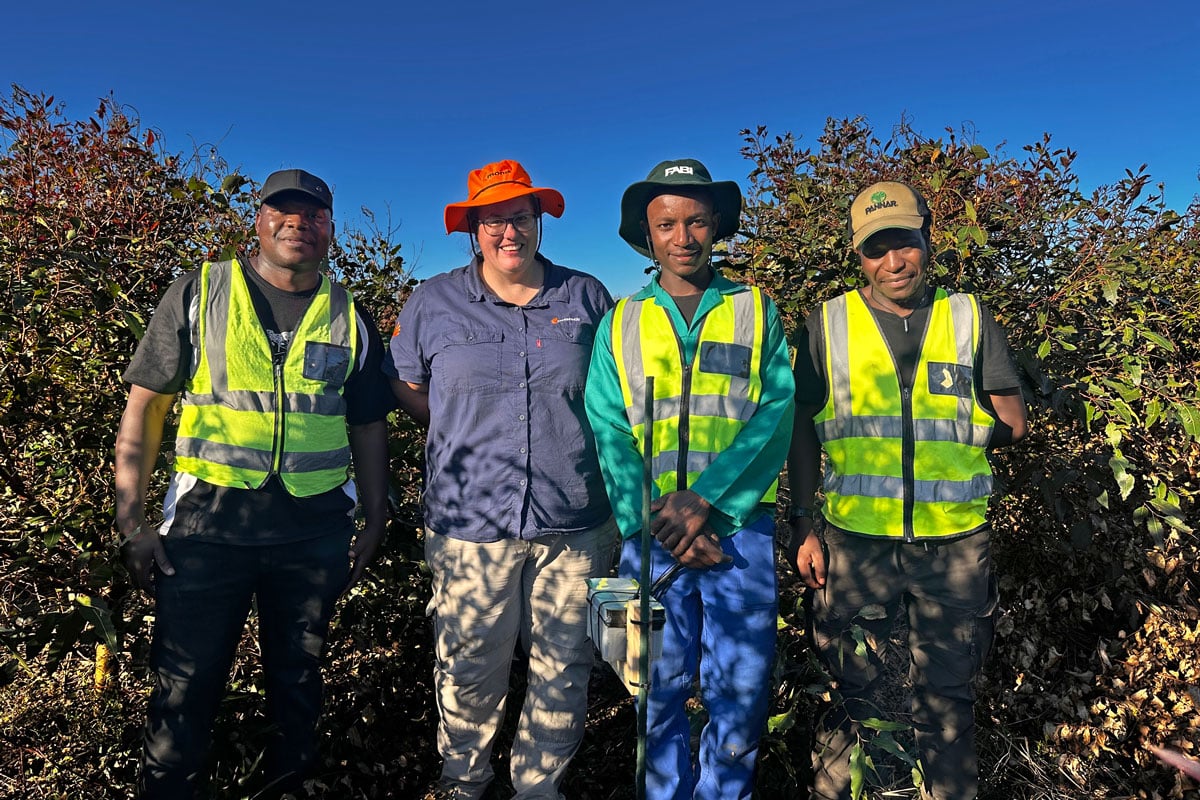
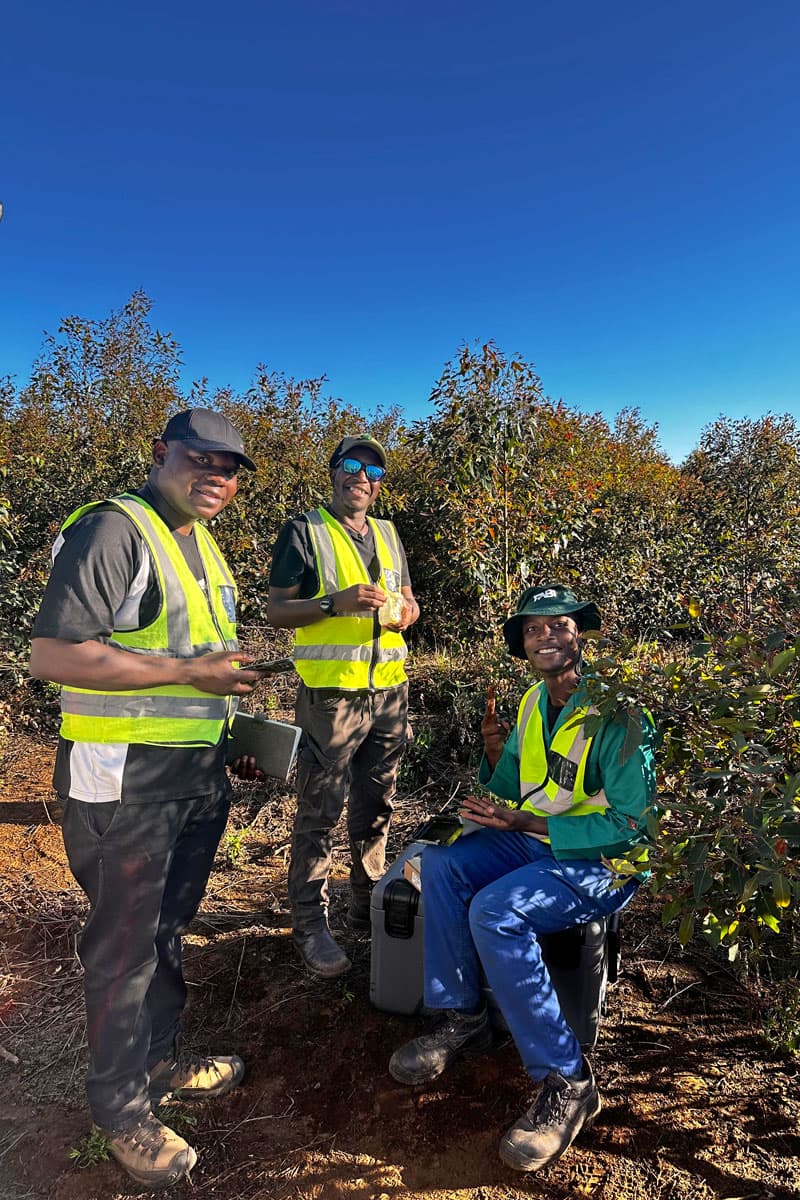
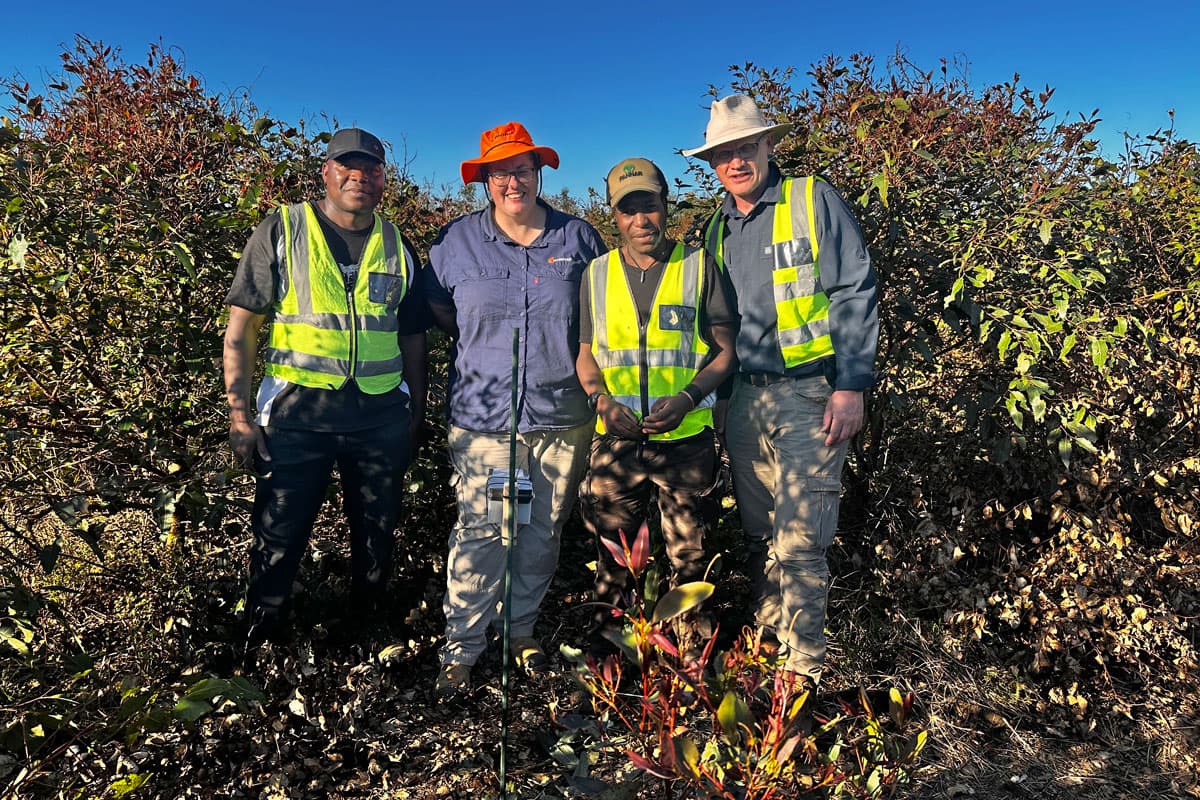
The field team consisted of Prof. Brett Hurley, Dr Privilege Makunde, Innocent Rakubu and Mandlenkosi Dube from FABI, and Izette Greyling from Mondi. The team sincerely thanks Mondi for providing access to its plantation and supporting the establishment of the trial. In addition, the team would like to thank Samantha Bush and Xavier Brits for their valuable contribution towards the sorting and preparation of A. nitens for the releases, and the TPCP extension team for collecting the parasitoid material that supported the establishment of the trials.
The next stage of this project is expected to set up more trials at Sappi plantation in the KZN Midlands region, close to Highflats. The team extends its appreciation to Sappi for providing access to its plantations and to Prof. Jolanda Roux, Siphephelo Phungula and the Sappi foresters for their help in finding suitable sites for this project.
By building on the historical success of A. nitens, this research will test whether augmentative releases can provide an additional tool for managing Gonipterus. The results may help reinforce sustainable biological control strategies and improve the durability of Eucalyptus plantations against future pest outbreaks.