
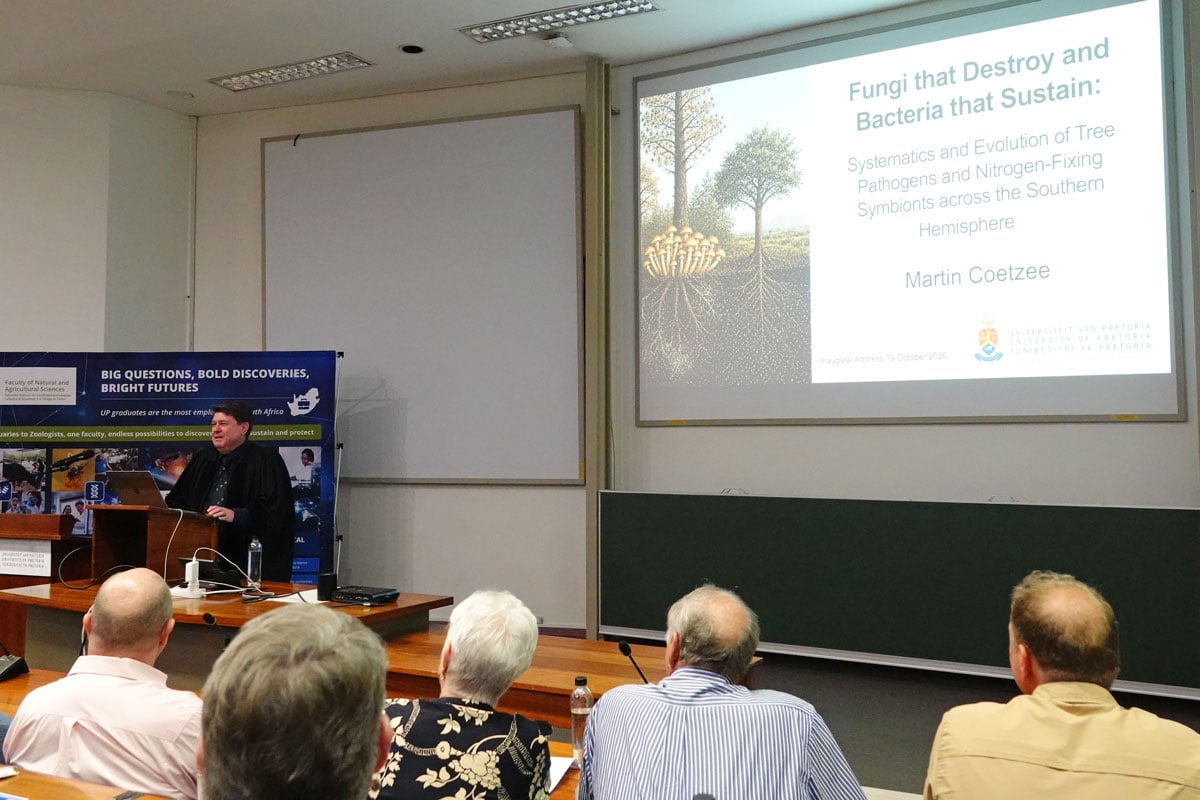
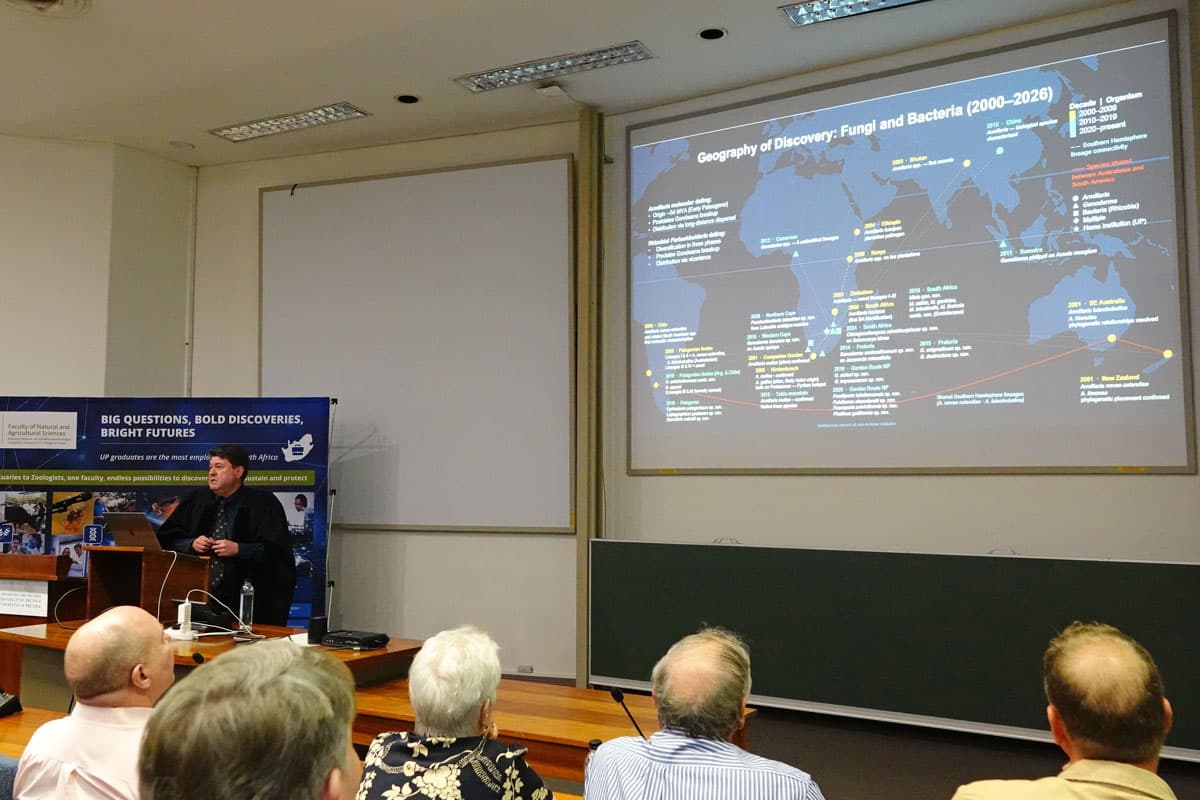
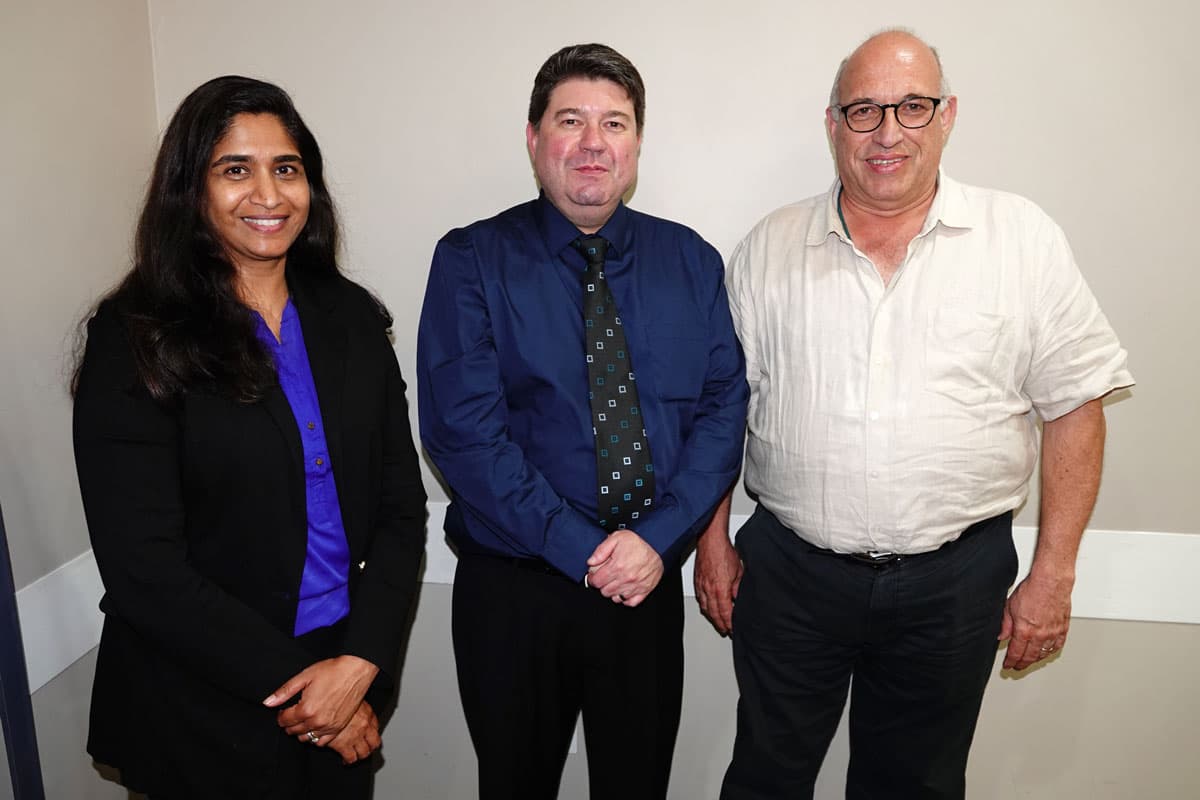
Professor Martin Coetzee presented his inaugural lecture “Fungi that destroy and bacteria that sustain: Systematics and evolution of tree pathogens and nitrogen fixing symbionts across the southern hemisphere” on 19 October. Martin is lecturing in the Department of Biochemistry, Genetics and Microbiology, and is appointed in the Forestry and Agricultural Biotechnology Institute (FABI). He was joined by family, friends and colleagues from both academia and industry to mark this important milestone in his academic career.
Martin started his studies at the University of the Free State and completed his Honors degree under the supervision of Prof. Brenda Wingfield, starting a long association with the Tree Protection Co-operative Programme (TPCP) and (later) FABI. He moved to the University of Pretoria, along with members of the TPCP that formed the core of FABI and completed his PhD in the Institute. Martin holds a C2 NRF rating, has authored or co-authored 88 publications in peer reviewed journals and supervised and co-supervised 24 Honours, 32 MSc and 12 PhD students. He also heads the Centre for Plant Health Biotechnology (CPHB) Internship in Phytosanitation and Biosecurity programme that has seen more than 60 interns complete their training in FABI.
Martin’s presentation reflected on research into tree-associated fungi and nitrogen-fixing rhizobia across the southern hemisphere and described how every scientific research journey starts with a simple question. The answer to that question often leads to new questions. He cited the introduction of the pathogenic basidiomycete Armillaria mellea, the co-called ‘van Riebeeck’s Curse’ from Europe into South Africa which was the focus of his PhD project as one of the fungi that destroy. This is in contrast to his research on Rhizobia that supports sustainable biological fertilizers.