
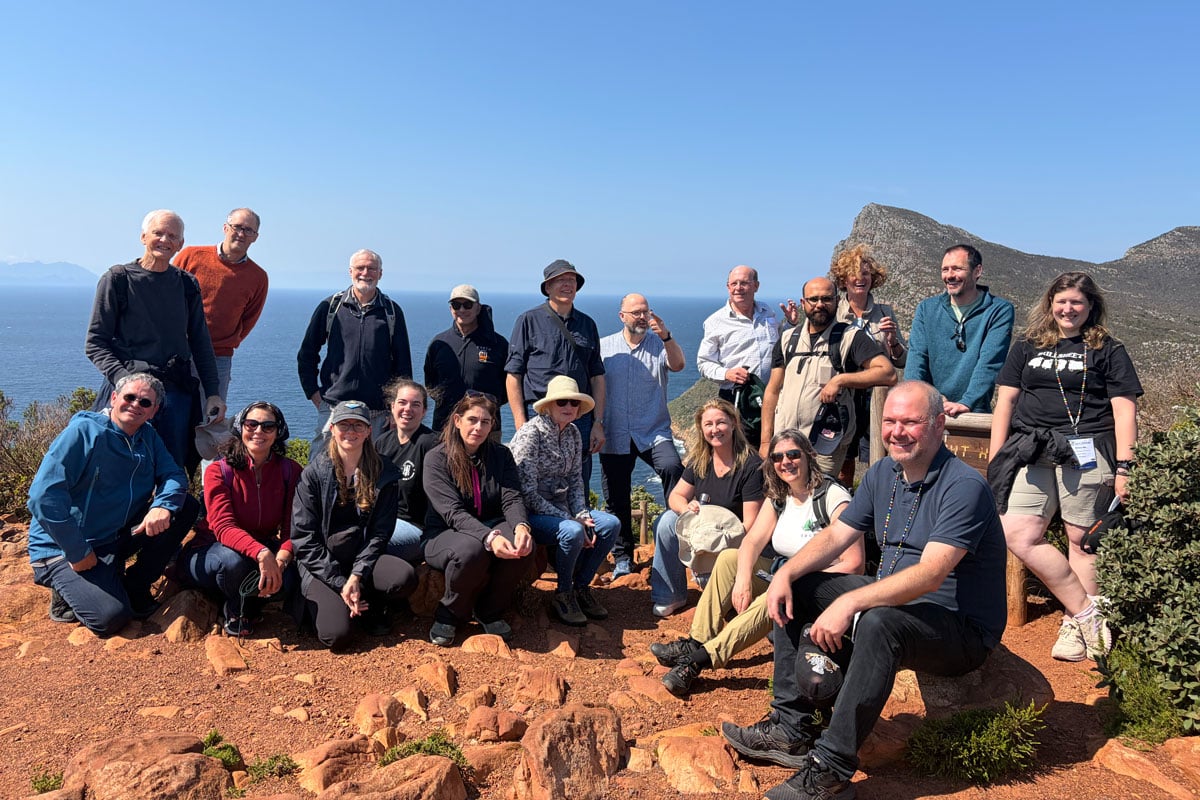
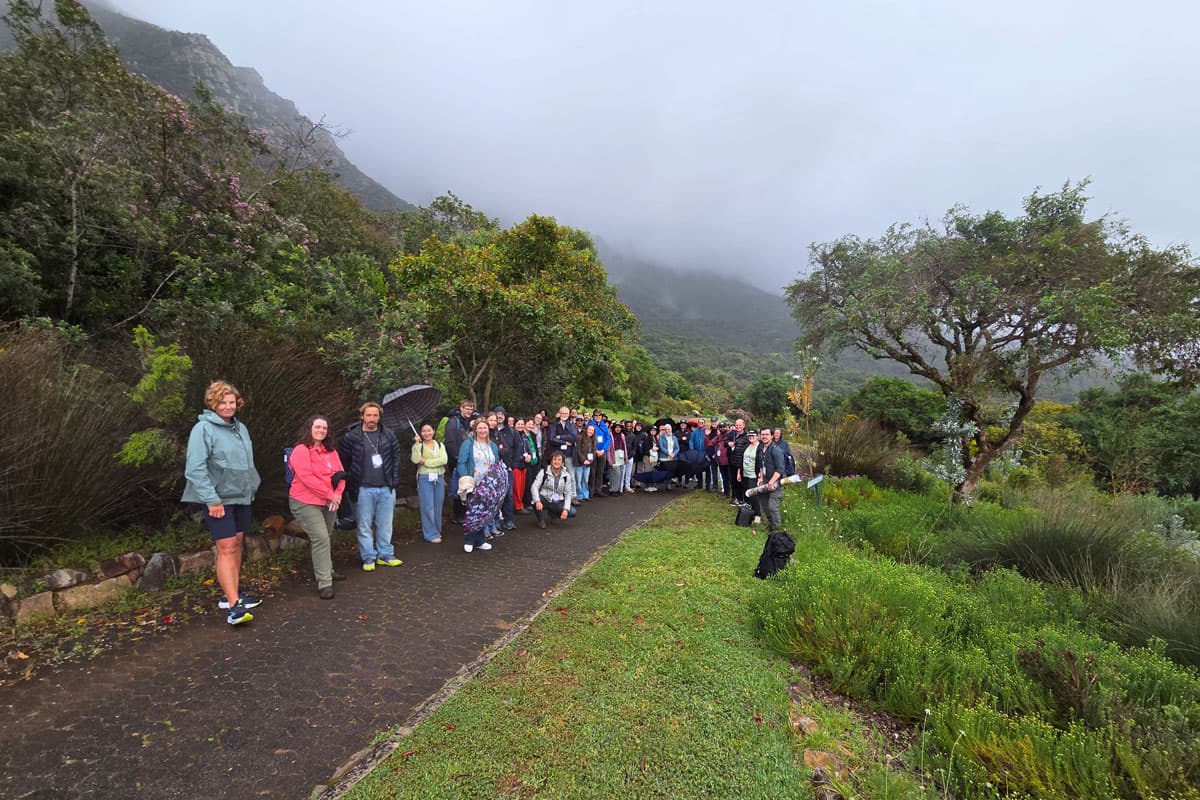
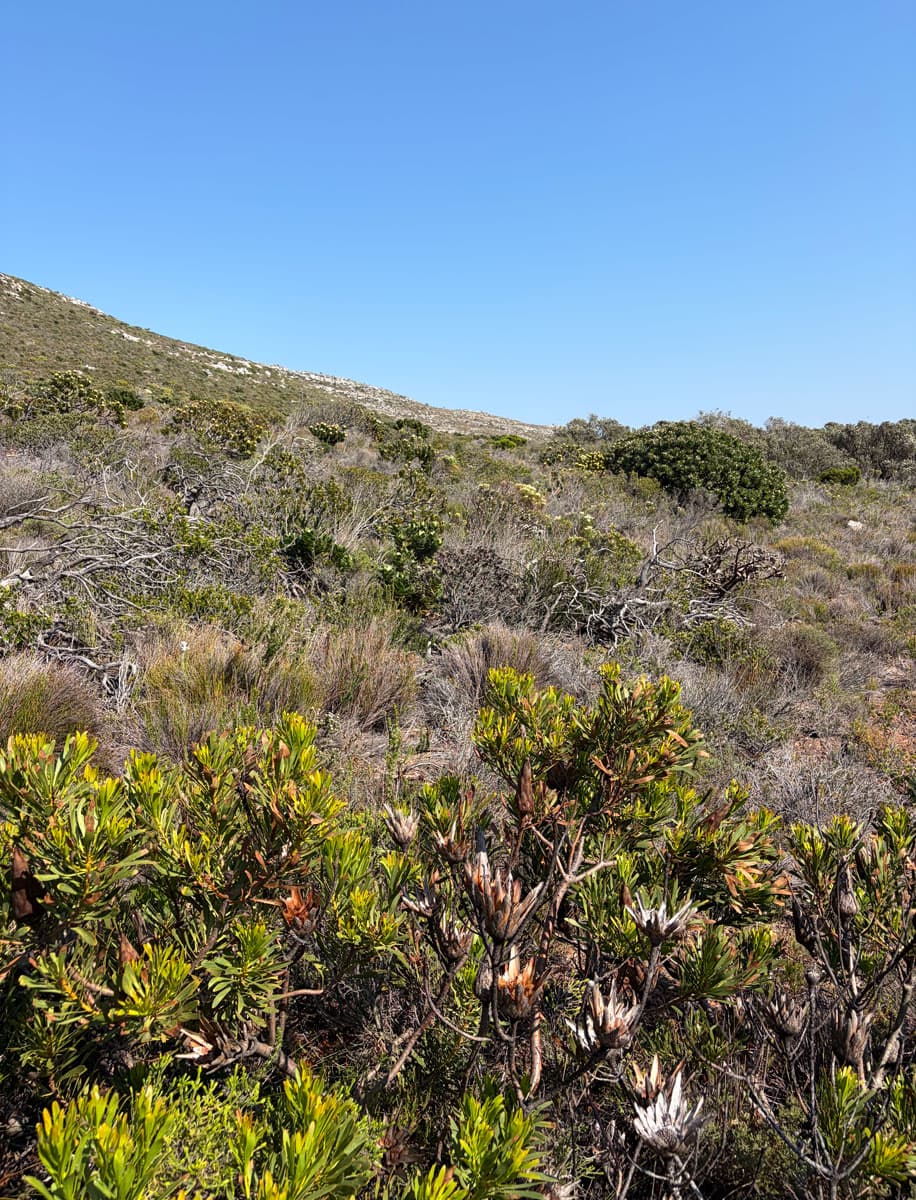
Delegates attending the 12th Meeting of the IUFRO Working Party 7.02.09, Phytophthora in Forests and Natural Ecosystems, took part in pre- and post-conference field trips that extended the scientific programme into some of the Western Cape’s most important botanical and natural areas. The pre-conference excursion on 14 September began with a guided tour of Kirstenbosch National Botanical Garden, providing international delegates with an opportunity to experience South Africa’s remarkable plant diversity, while learning about the devastating and irreversible impacts of Phytophthora cinnamomi on native Proteaceae. The post-conference field trip, held from 18-21 September, combined forest pathology with botanical exploration and exposure to the region’s distinctive landscapes. One of the scientific highlights was a visit to a P. cinnamomi-infested site at Craigantlet Nature Reserve, where delegates were able to observe the pathogen’s impact on natural ecosystems. The itinerary also included Waenhuiskrans Nature Reserve, Agulhas National Park, the SA Chelsea Flower Show in Stanford and Harold Porter National Botanical Garden, providing delegates with opportunities to explore the Cape’s diverse coastal, fynbos and botanical environments. The excursion concluded at Cape Point Nature Reserve, where the presence of native Proteaceae threatened by P. cinnamomi provided a fitting reminder of the ecological challenges discussed throughout the conference. In addition to the field-based learning, the trips created valuable opportunities for informal discussions, networking and the exchange of ideas among researchers from around the world. By bringing delegates into direct contact with the ecosystems and plant communities affected by Phytophthora, the excursions provided an important practical extension of the conference programme and highlighted the need to understand plant pathogens within their broader ecological context.