






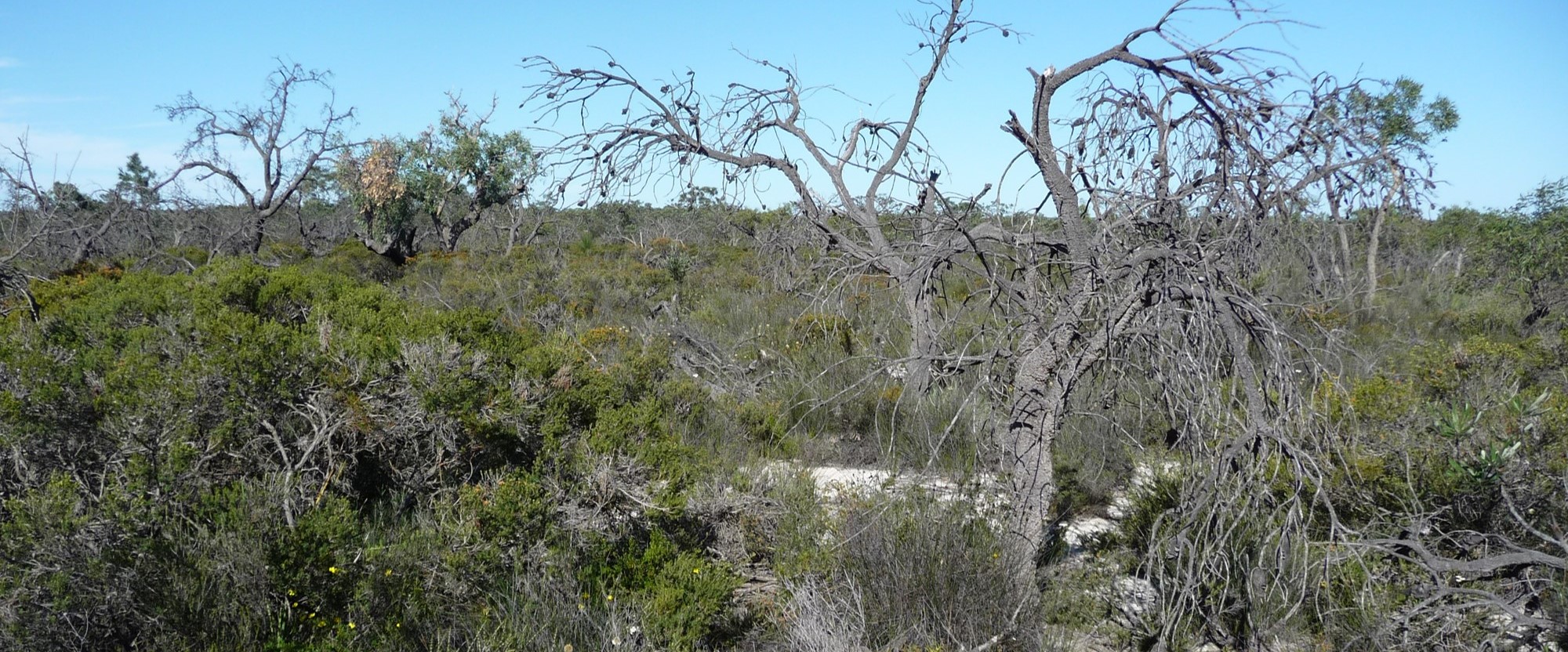
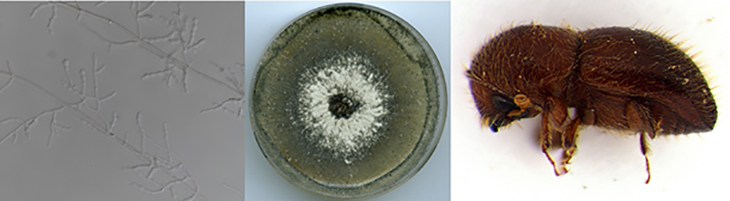
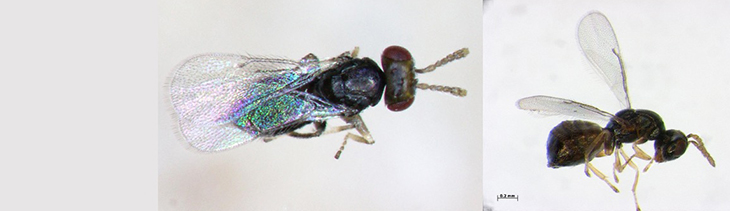

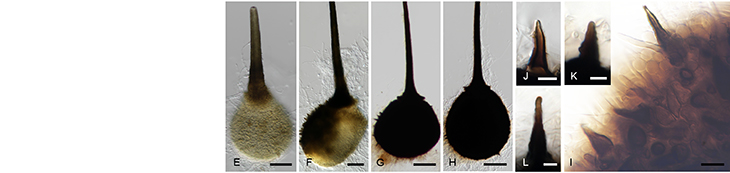


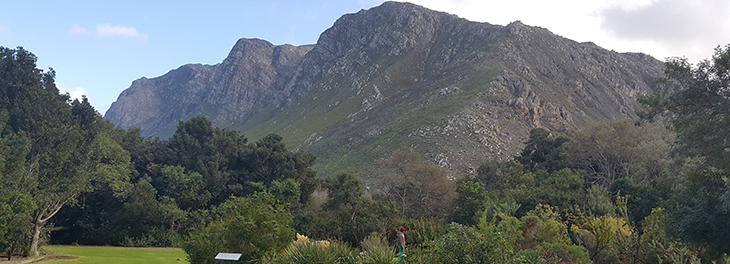
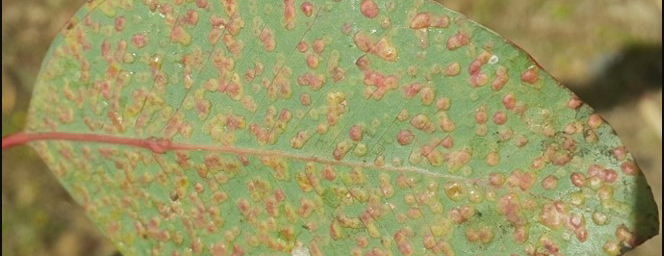



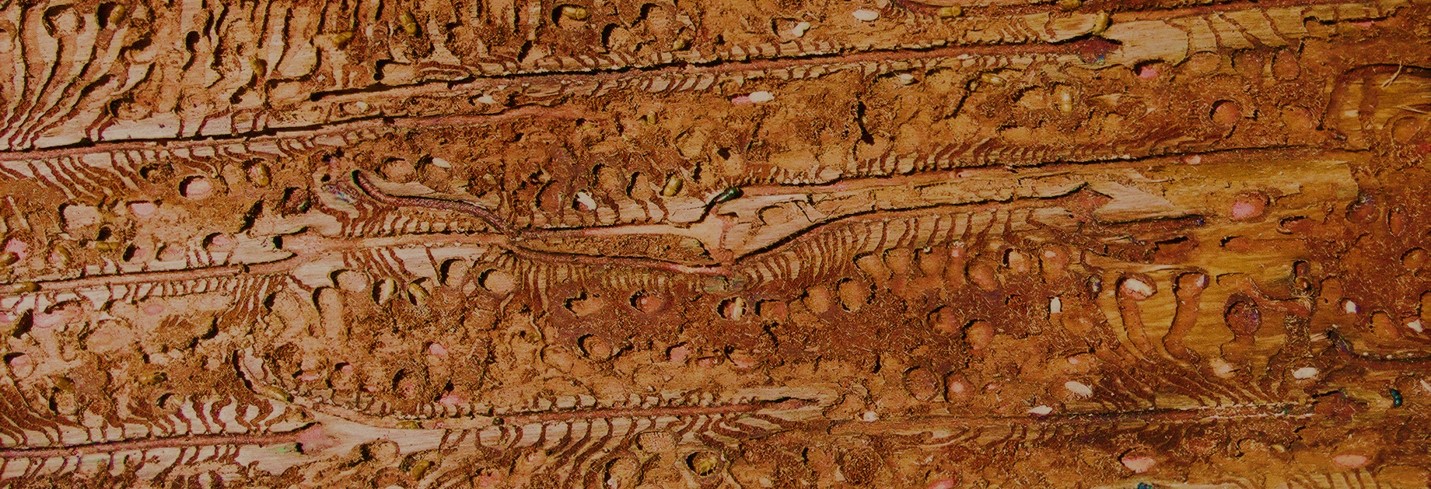



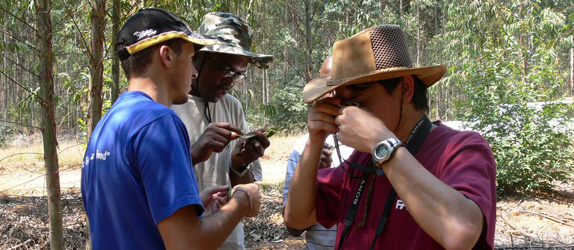
All field trips and field extension work undertaken by the staff and students of the CTHB is coordinated by Prof Jolanda Roux. She also ensures that reports on these trips and research findings are communicated to relevant stakeholders. The extension component of the CTHB involves the presentation of talks at research meetings and field days, publication of articles in newsletters and newspapers as well as radio interviews to educate the public regarding tree health.
Research in the Kruger National Park (KNP)
In the latter part of 2004, the CTHB formed an alliance with the KNP in order to study the diseases of trees in the park.
One of the main projects constituting this research agreement was to investigate fungi and insects associated with wounds on trees caused by elephants in KNP. Additional projects have been initiated to identify any possible serious tree diseases present in the reserve.
(See "Information Nuggets" for more detail)
African collaborations
Insect pests and pathogens do not recognize international boundaries, making it crucial for collaboration between different countries in order to effectively manage tree diseases. There has thus been a strong drive by the TPCP and CTHB to build collaborations with researchers in other African countries, including Cameroon, Namibia, Malawi, Mozambique, Zambia and Zimbabwe. Several disease survey trips are regularly undertaken to these countries, where most activities focus on the health of Myrtales, Adansonia digitata and other savanna tree species.
(See "Information Nuggets" for more detail)
Pest and Pathogen Diagnostic Clinic
The TPCP and CTHB maintain a world-class disease and insect pest Diagnostic Clinic. In addition to providing an invaluable service to the South African Forestry Industry, the Diagnostic Clinic also provides stakeholders with the capacity to identify insect pest and disease outbreaks associated with native trees.
For more information about the disease and insect pest Diagnostic Clinic, please visit: TPCP Services.
