





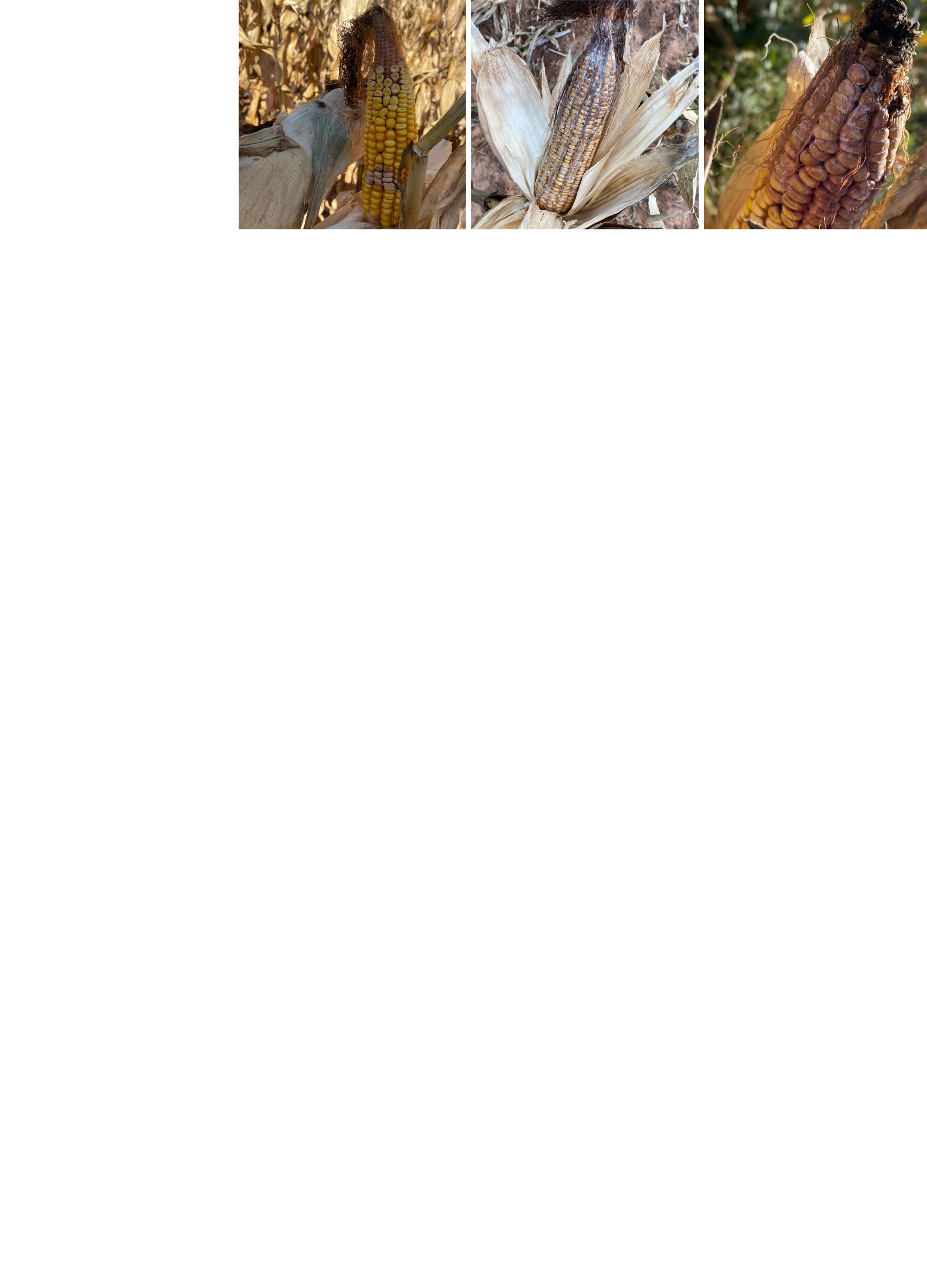
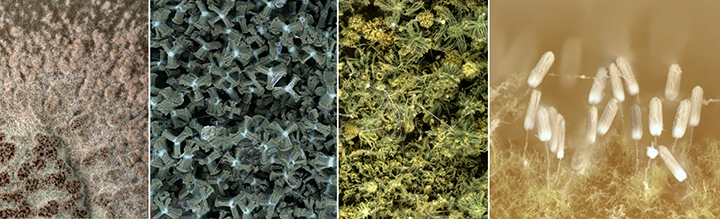


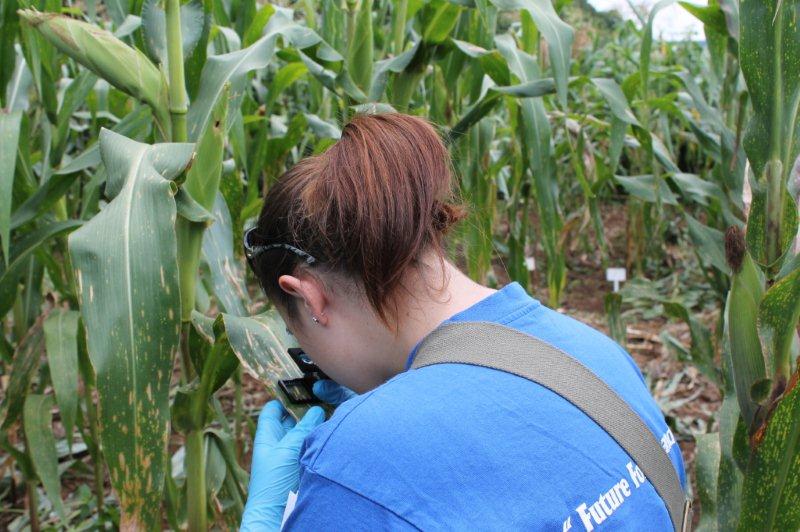
Pathosystems currently under study include grey leaf spot in maize (GLS) caused by Cercospora zeina, and northern corn leaf blight (NCLB) in maize and sorghum caused by Exserohilum turcicum.
Grey leaf spot in Africa is caused by the fungal pathogen Cercospora zeina. This widespread and destructive pathogen causes millions of rands worth of loss to maize yields every year. In collaboration with Professor Dave Berger (UP) and Professor Burt Bluhm (University of Arkansas), the research group is focussed on functional genomics of virulence factors of C. zeina. Previously characterised Dothideomycete as well as C. zeina specific effector genes, responsible for disease in maize, are identified in the recently assembled African C. zeina genome, and effector function is established through creating knock-out fungal mutants. Following maize infection, we monitor maize plants' response to these mutant strains compared to wild type C. zeina strains. In addition, we have constructed strains of C. zeina containing the green fluorescent protein in order to elucidate the exact mode of infection of this fungus using confocal microscopy, and determine whether it is similar to the closely related maize pathogen C. zeae-maydis.
Northern corn leaf blight (NCLB), caused by the fungus Exserohilum turcicum, is a devastating leaf foliar pathogen that occurs in most maize growing areas throughout the world. As part of a long term project to identify and isolate virulence factors from maize foliar fungal pathogens, CFPR is interested in characterising E. turcicum isolates from South Africa using simple sequence repeats (SSRs) as molecular markers. Setosphaeria turcica, the telomorph form of E. turcicum, has been sequenced as part of a Dothidiomycete sequencing project at the Joint Genome Initiative (http://www.jgi.doe.gov/genome-projects/). We used this sequence to identify single strand repeats, and design primers to conserved flanking regions for use in molecular characterisation of South African E. turcicum isolates. In addition, we are working together with Dr Maryke Craven from the ARC Grain Crops Institute in order to develop molecular markers to identify the various races of E. turcicum present in South African maize fields.
